AI for Construction &
General Contracting
Better margins start with connected data. We define your AI strategy in 60 days, connect your project and financial systems, and build solutions around job costing, estimating, and operational efficiency. Through hands-on training, we help your teams turn AI into everyday value.
200+
Implementations delivered
1,000s
Of employees trained
400+
Solutions deployed
Official Service Partners
The numbers that run your business live in systems that don't talk.
Every big decision gets made before the real numbers are in.

The weekly job cost report is built by hand.
The budget is in Procore (Autodesk Build or other equivalent). Actual costs are in accounting. Labor is in payroll. Nothing connects them, so someone copies all three into a spreadsheet every week to see where each job stands.

You learn a job lost money after it closes.
Payroll and expenses reach the job cost report weeks late. Until then the report shows the job on budget. By closeout the loss is final.
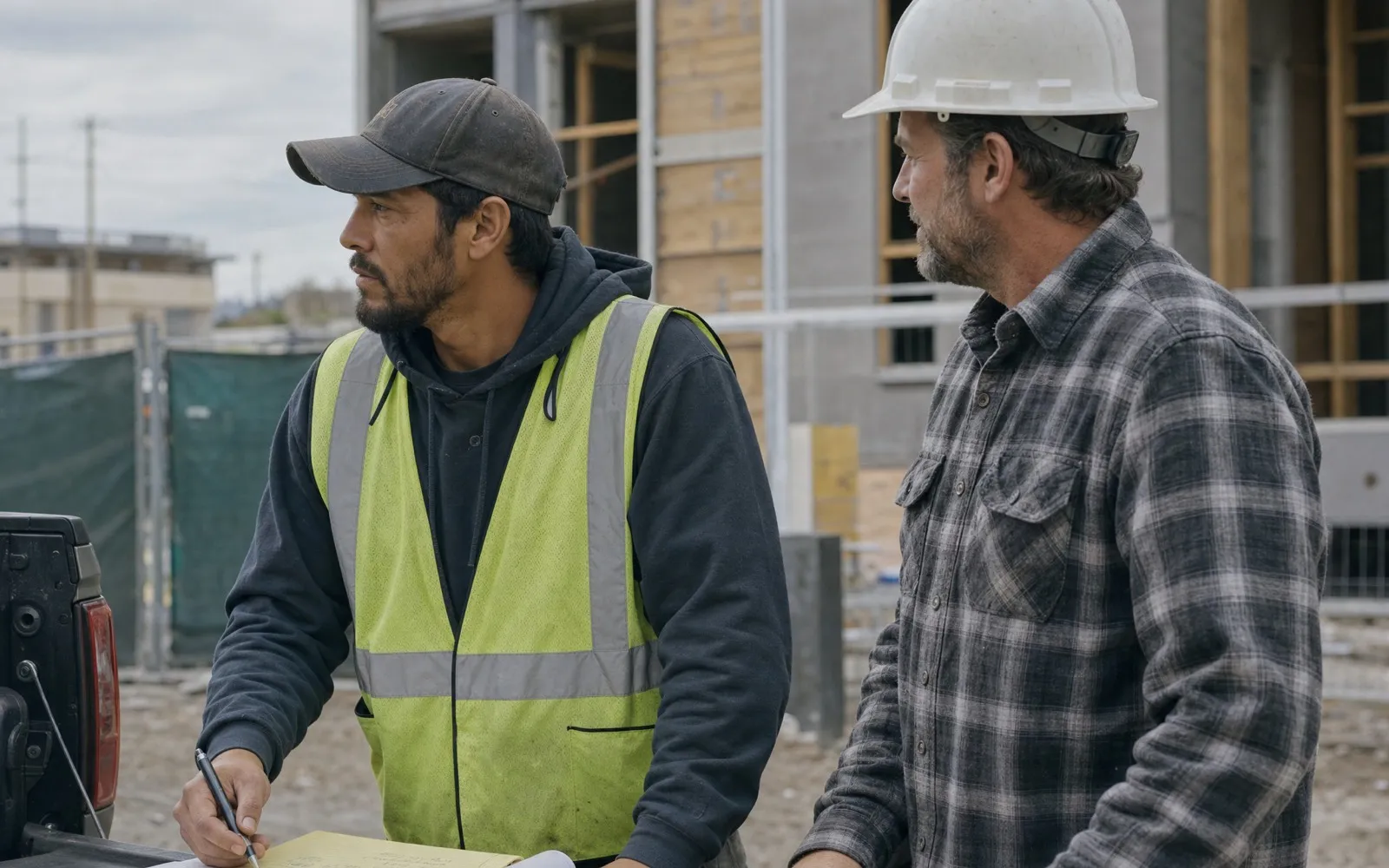
Estimators bid without the real costs of past jobs.
Final costs from finished jobs sit in closed project folders. Nobody opens them at bid time, so the new bid is priced from memory.
The numbers that your business runs on, in one place and current
These six solutions connect project, accounting, and payroll data so that every AI tool added later uses the same numbers.
One view of every project's budget and actuals
Every project's budget and actuals in one view, current every morning. Right now the budget sits in Procore (or equivalent project management system) and the actuals sit in accounting. Someone compares them by hand in a spreadsheet that is days old before anyone reads it.
We connect the two systems and match every project cost code to an accounting code. The job cost report then updates every night. An overrun shows up the next morning, while the job can still recover the cost.
Catch what your two core systems disagree about
Every mismatch between the two systems, caught the same day it happens. Today a change order or invoice gets typed into Procore (or equivalent project management system), then again into accounting, and nothing catches a missed entry until the books close.
We reconcile both systems every day and flag every change order never booked, every invoice never entered, and every commitment that does not match. Missed entries get caught the same day, before they hold up a subcontractor's payment.
What a job really cost, including labor
The real cost of a job, including labor, known before the job closes. Today payroll and expenses sit outside job cost, so labor burden is only ever a guess. The actual labor cost of a job is known only after it closes.
We add actual payroll and expense data to cost by project and cost code. Margin on each job is then calculated from actual costs while the job is open. Job types that lose money are flagged before the next bid.
Let estimators see what past jobs actually cost
An estimator's next bid, already grounded in what similar jobs actually cost. Today final costs for finished jobs sit in old project files that nobody has sorted, so a new bid gets built from memory alone.
We pull final costs for every completed job and sort them by project type, size, and cost code. Every job that closes is added the same way. A new estimator prices from the firm's job history on day one.
Score your subcontractors on their actual record
Every subcontractor's record, scored before the next award goes out. Today subcontractor selection runs on habit and memory. Cost creep, schedule slips, and rework from the same few subcontractors rarely get recorded against their names.
We build a scorecard for each subcontractor from its award and performance history. It shows bid price against peers, schedule reliability, change order growth, and share of the firm's open work. The record sits beside the price at every award.
Add up all your entities into one view
Every entity's numbers, and the whole portfolio, in one place. A company can run several entities, sometimes a developer and a contractor under the same owner. Today each one keeps its own books, so ownership combines their reports by hand every month.
We map every entity to one shared chart of accounts and build one combined view. A lender or partner sees only the entity it is involved with. Ownership sees the whole portfolio at any time, with no reports combined by hand.
How we deliver AI teams love and leaders can count on
Every stage is built to win more work, raise the margin on each job, and cut the hours employees spend on manual work.
We find your highest-impact opportunities for AI.
StrategyWe find your highest-impact opportunities for AI.
Through interviews across every department and an audit of the company's systems and data, we establish an AI maturity score. Those findings produce a ranked list of opportunities, a prioritized 12-month roadmap, and a 3-year vision for AI.
About strategy
We connect your systems into one live layer.
Data and dashboardsWe connect your systems into one live layer.
Business systems connect into one centralized data warehouse, giving the team and the AI we deploy a shared source of truth. Rather than piecing together answers from spreadsheets and separate systems, employees can ask questions and get answers from across their company's data, with role-based permissions built in.
About data and dashboards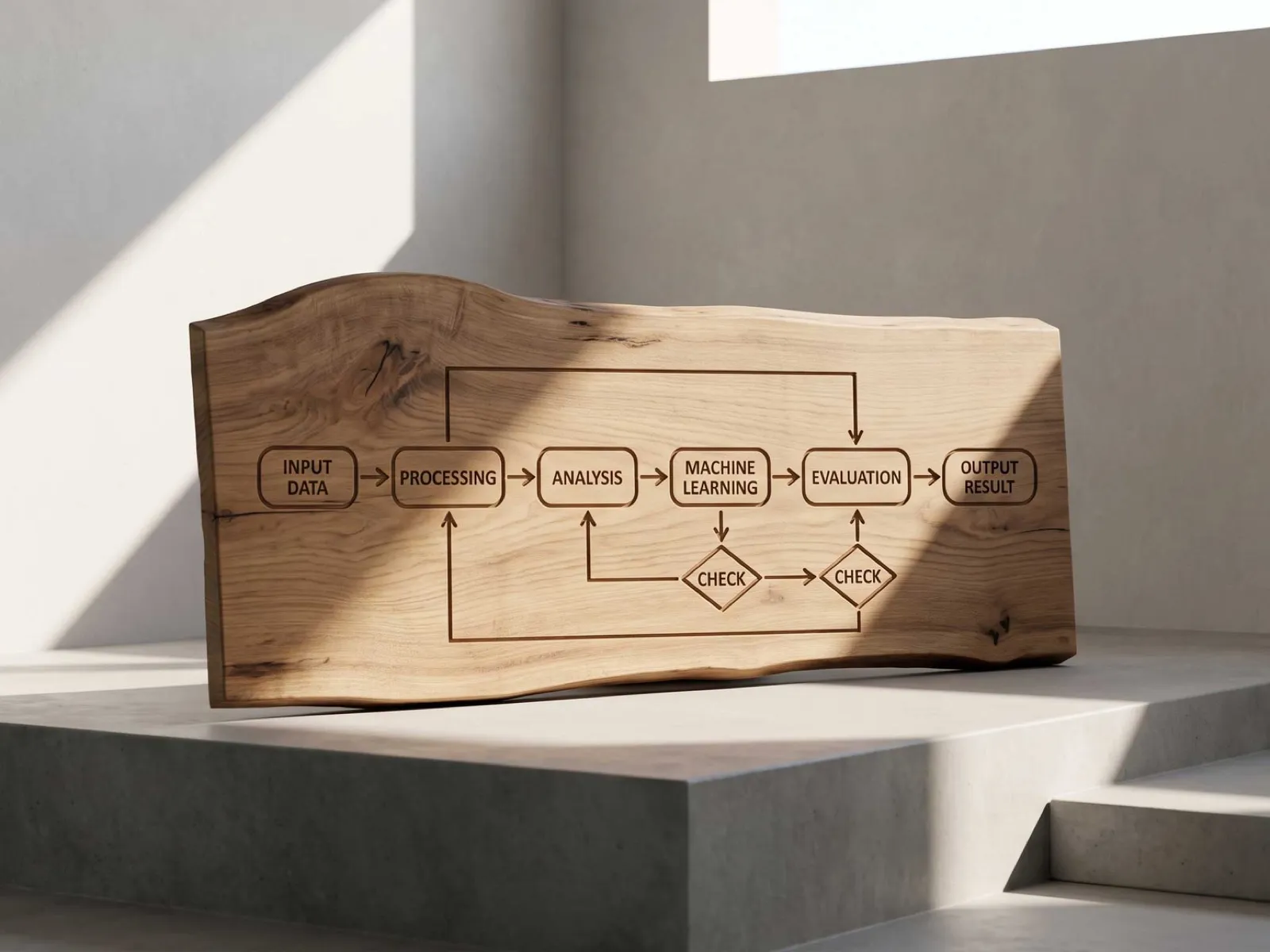
We train your team on AI, specific to each department.
TrainingWe train your team on AI, specific to each department.
From executives to employees across every department, training covers the fundamentals of AI and its practical use at work. Each department also receives hands-on training built around its specific roles and workflows, with office hours and a help desk available for ongoing support.
About training
We build solutions bespoke to your business needs.
Custom engineering, workflows, agentsWe build solutions bespoke to your business needs.
The highest-priority opportunities in the AI strategy guide our engineering. We assess existing tools where appropriate and develop custom workflows, automations, and AI agents that eliminate manual work, reduce errors, and improve productivity.
About custom engineering
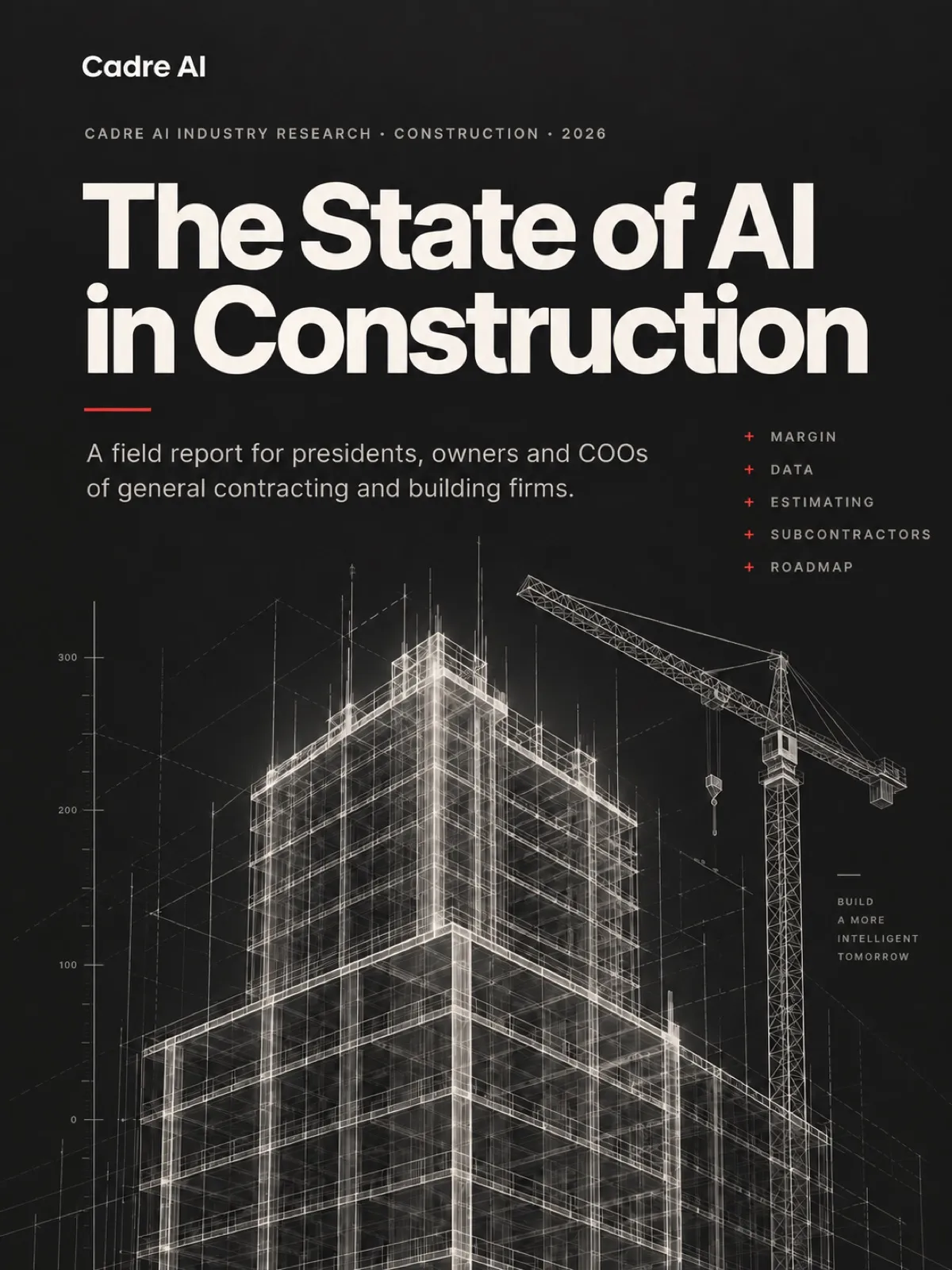
The construction white paper
A field report for the presidents, owners, and COOs running general contracting and building firms. It draws on forty cited sources, including industry surveys, federal data, and published case studies of contractors already using AI.