Every system connected into one trusted set of numbers.

We connect your systems and model the data before any AI is built. The build takes 60 days, and at the end your team can ask about any number in the business and get the right one back.
Four cubes of concrete, brushed steel, walnut and frosted glass joined by transparent pipes

Why the data work comes first

1
AI misreads raw data
It cannot tell one type of deal or charge from another.
It does not know what your team means by the words you use.
It sees today's numbers only, with no trend or monthly totals.
2
Modeled data fixes it
We connect your systems into one data warehouse.
We normalize the data and agree what every term means.
We build the data models that explain your business.
3
Results in 60 days
Ask about any number and get the right one back.
Run reports your company has never been able to run.
Three to five use cases live within the 60-day build.

Why this matters:

The data build takes 60 days, days 60 to 120 of the engagement, once the AI strategy is set. It connects and models the data your business already has. Everything you want AI to do next, agents, workflows and interfaces, reads that data. Build it first and every AI project after it starts on numbers that are right.

How we connect and model your data

  • Connect the systems.

    We connect your CRM, ERP, accounting, HR and payroll and operational systems into one data warehouse, plus the spreadsheets and feeds you already receive.

  • Normalize the data.

    We rebuild the raw data so one row holds one customer, order or location, with every related record attached to it.

  • Agree what each term means.

    We write your definitions into a semantic layer, so a term like gross margin means one thing in every report and every AI answer.

  • Build the data models.

    We build a data model for each use case you choose, three to five within the 60-day build.

A blue mannequin in a grey polo holding a progress report, with dashboard cards reading Milestone Completion Rate 85% and Client Progress Report Generated

AI gives wrong answers on disconnected data
The Challenge
Point AI at one system and it answers from that system alone, confidently and wrongly, because the rest of your numbers sit in others.
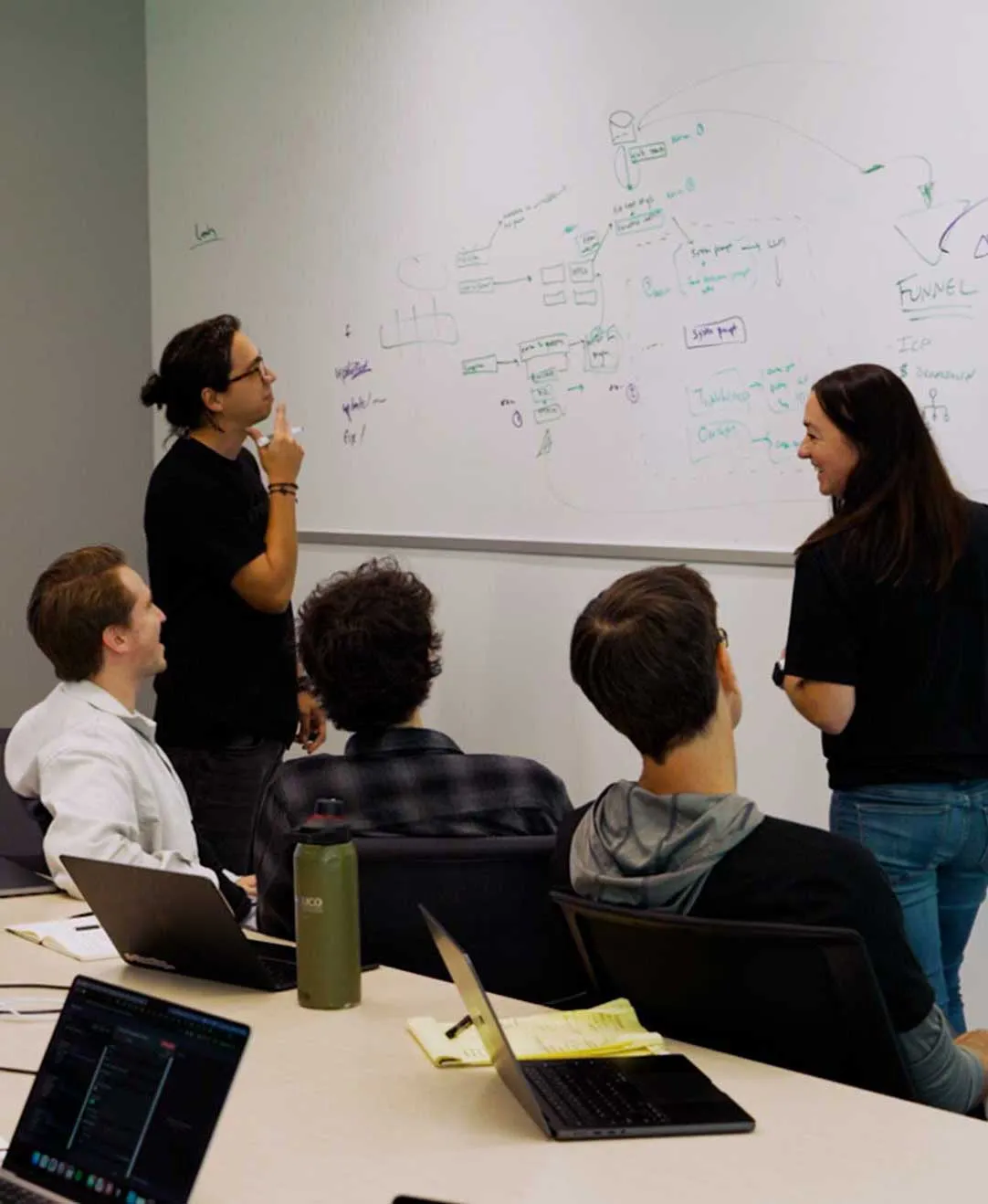
Cadre AI team working at a table in the office, two of them sketching a systems diagram on a whiteboard
Our Advantage
We build the data first and we protect that build. It is scoped before our first conversation and delivered in a 60-day build, days 60 to 120 of the engagement, so the custom engineering that follows runs on connected, modeled data.

Why It Matters

Connecting your systems shows exactly which fields, locations and processes produce bad data, so your team can fix each one at the source.

The first build covers the records inside your systems

Data refreshes once a night, and more often on the enterprise tier.
In scope from day one
The records, fields, amounts and dates in your CRM, ERP, accounting, HR and payroll and operational systems are included. So is data that arrives as a feed or a file, such as bank and vendor exports, partner portal downloads and spreadsheets emailed on a schedule. We pull, parse and normalize all of it every night.
Documents are priced separately
Contracts, standard operating procedures, reports and email threads need their own build. A knowledge graph answers questions across many documents, and a direct connection pulls up one document on demand. A solution architect scopes and prices that build separately.
Industry Specific Expertise

Proven Across Industries

Data use cases are built around the pains each industry already has, so the first question asked is one the team has been asking for years.
Our Strategic Approach

Custom AI needs connected data

The agents, workflows and interfaces you want go on the roadmap as phase two. Every one of them reads your company's data, so we connect and model that data first, then build them on it.

AI Strategy

AI strategy: a sculpture of timber and glass in a sunlit room
AI engineering: a sculpture of glass and steel in a concrete room

AI Engineering

Questions we hear

We already connected Claude to one of our systems. Why isn't that enough?
Claude does not know your business. It cannot tell which field marks one type of deal or charge from another, or what your team means by the terms it uses, so it guesses and answers with confidence. A connector also reads only what the data says right now, so it cannot show a trend or last year's monthly totals. We build the normalized data, the semantic layer and the data models first, and they fix both problems.
Can it answer questions about our contracts and SOPs too?
Not in the first build. The first build answers questions from the structured data in your systems: records, amounts and dates. Documents need their own build, either a knowledge graph that lets you query them next to the data or a direct connection that pulls up one document on demand. We scope and price that build separately, and most companies find the structured data answers most of their questions.
We already have Power BI or Tableau.
Power BI and Tableau display the data they are pointed at, including the errors and conflicting numbers from disconnected systems. We connect the systems, organize the data and agree its definitions, then build the dashboards and AI on top. Many of our clients keep Power BI and point it at the data warehouse we build, so the dashboards you already have keep working.
Our data is a mess. We're not ready.
If the data entered into a system is wrong, no tool can correct it, including ours. The cleanup can start after we connect the systems, because connecting them shows exactly which fields, locations and processes produce the bad data. Your team fixes it at the source, usually much faster once it is visible, and the agreed definitions keep each term consistent after the fix.
Is our data safe with AI on it?
Each customer gets an isolated instance on a SOC 2 Type II platform. There is zero AI data retention under signed agreements with the AI providers. The data never trains a model, and row-level security controls who sees what at query time.
AI makes things up.
It does when it reads raw data with no agreed definitions, and many people have seen that happen. We give it modeled data with agreed definitions, so it answers only from your company's numbers and refuses a question when it does not have access to the data.

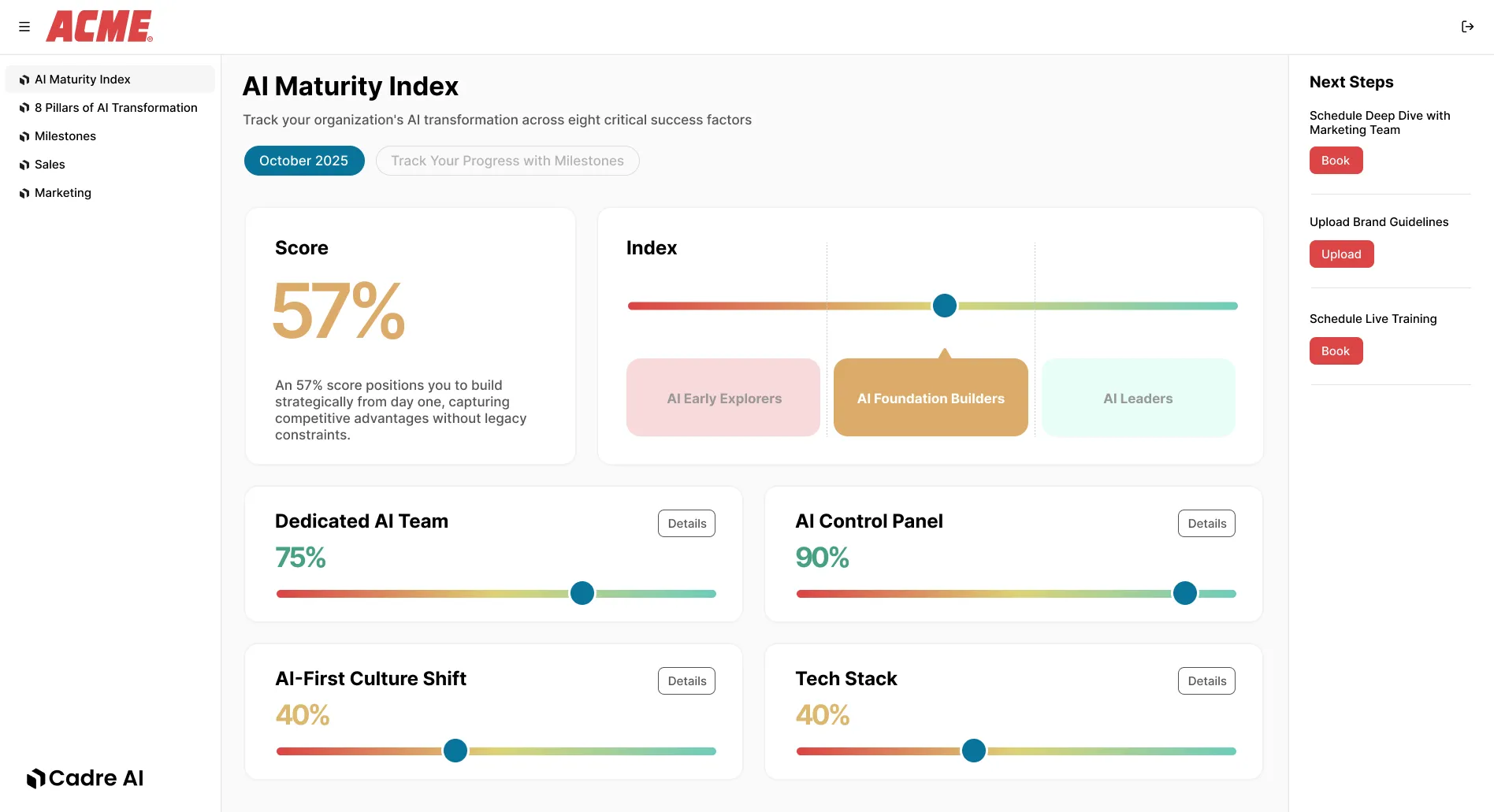
Track your AI results

Cadre gives you a centralized portal to track tools, agents, training, and results. Stay aligned, stay accountable, and scale what works.
AI Maturity Index dashboard